
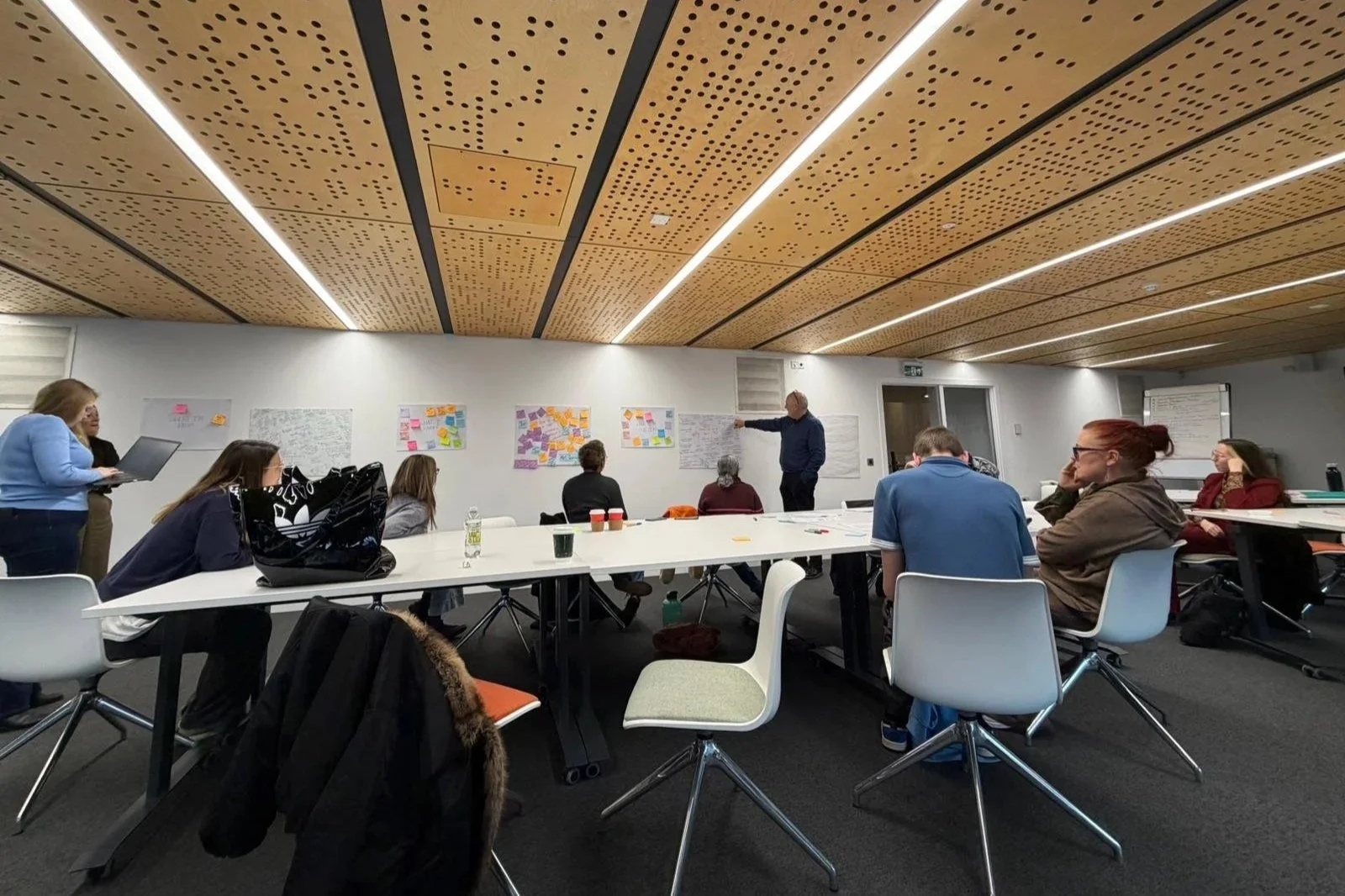
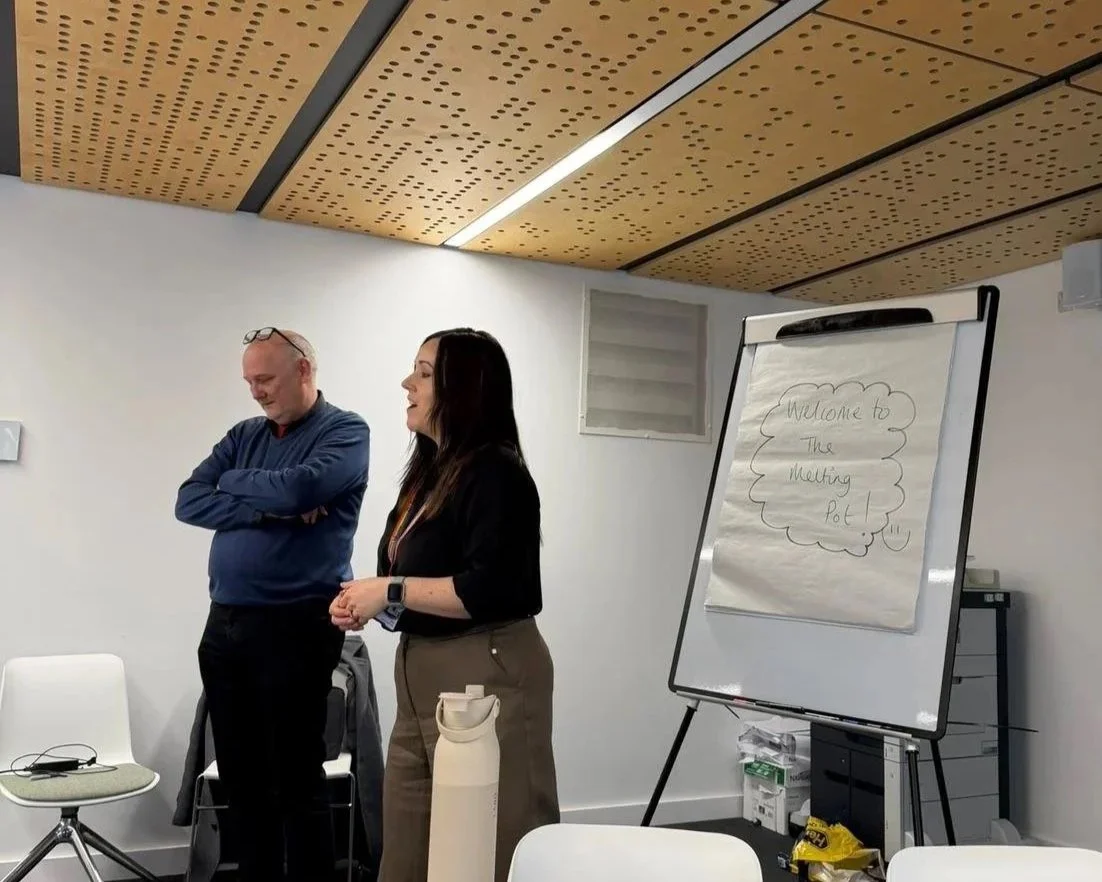
Last Friday, we gathered for the first in-person Melting Pot - a space born out of a series of blogs I wrote last summer about power, precarity, access and belonging in the cultural sector.
What emerged in the room wasn’t a manifesto or a list of neat solutions. It was something more useful: a shared diagnosis, grounded in lived experience, and held with care.
We began by inviting people to reflect on where they’re from, what they’re carrying, and what they’re building. What followed was a mix of stories spanning theatre, dance, education, disability arts, youth work, community practice and freelance life — across generations, identities and career stages.
Despite very different contexts, some clear themes rose to the surface.
What emerged
1) From extraction to custodianship
A central question running through the day was:
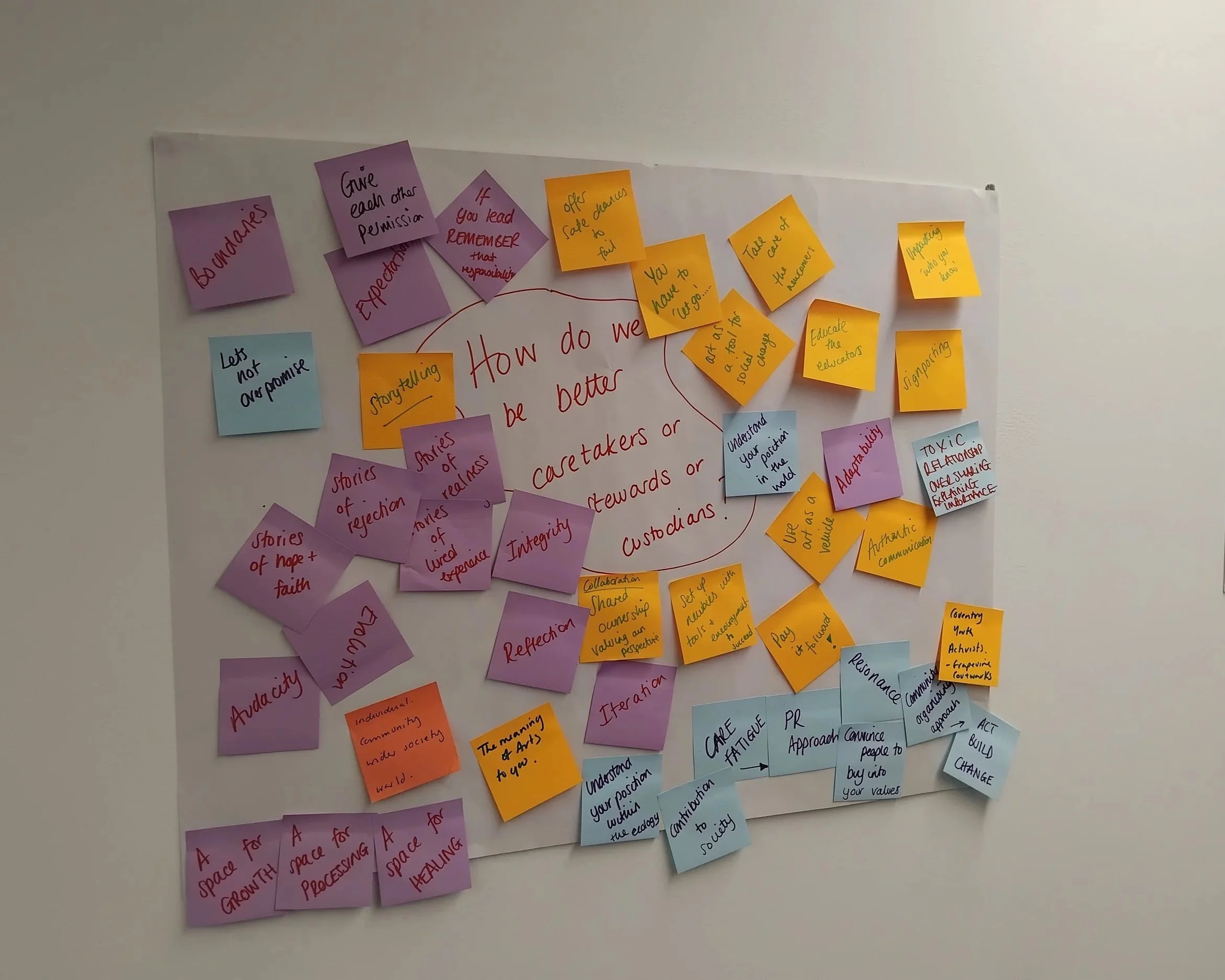
How do we, as individuals, become better custodians: of people, spaces, ideas and futures?
Custodianship came through as more than kindness. It was described as responsibility: noticing how power operates, making decisions with awareness of who is included or excluded, and leaving things better than we found them.
It also came with a cost. The tiredness I (and others I suspect) experienced that followed the day wasn’t burnout. It was custodial fatigue - the fatigue that comes from holding space with integrity, staying with complexity (but not knowing the answers), and resisting the urge to rush people’s experiences into outcomes. It was a tough gig!
2) We need spaces for healing and spaces for growth
A strong theme was the need to distinguish between:
Healing spaces (to process harm, past or present trauma, exhaustion and exclusion), and
Growth spaces (to build skills, confidence, networks and routes forward)
People spoke openly about tokenism, classed behaviour, ableist structures, unspoken rules, and the repercussions of naming unfairness. Alongside this was a desire for growth - not just artistic development, but the capability to navigate the sector itself.
A key insight: pushing people to “grow” when they need to heal causes harm: and keeping people in reflection when they need tools limits their agency.
The Melting Pot sat somewhere between the two: a threshold space where honesty, care and possibility could coexist. Where else could this type of space exist? Who else could promote or curate this with the resources they have ‘in-house’? Not a networking space or co-working space, something more but not predetermined.
3) Access is cultural, not just physical
Access came up repeatedly — not only in terms of buildings or formats, but in language, confidence, legibility and power.
People named:
class-coded behaviour and “gentleman’s agreements”
expectations of professionalism without protection
hidden power structures that shape who gets heard
gatekeeping practice as part and parcel of ‘the way it all works’ (unbeknown to the gatekeepers themselves)
the pressure to assimilate, self-erase or commodify identity
This reframed access as a cultural issue: how safe, legible and survivable a space is, not just whether the door is technically open.
4) Capability matters as much as talent
One of the clearest diagnoses of the day was this:
We lose enormous potential because people are expected to survive the sector alone.
People are trained to make work but not to navigate the systems around the work. Funding, commissioning, leadership and progression often rely on tacit knowledge that’s unevenly distributed, while support structures remain thin or non-existent.
If funding systems can’t (or won’t) resource this navigation, communities may need to step in.
5) Imagining parallel support economies
This led to a practical line of thinking: what might a generosity-based “marketplace” look like for the sector?
Not as a replacement for public funding, nor a replacement of the current system but as parallel infrastructure: sharing skills, resources, time, access and knowledge while larger systems lag behind reality.
Ideas ranged from skill swaps and mutual referral networks to shared visibility and warm introductions. What mattered wasn’t the model itself, but the principle: building resilience together rather than waiting to be rescued.
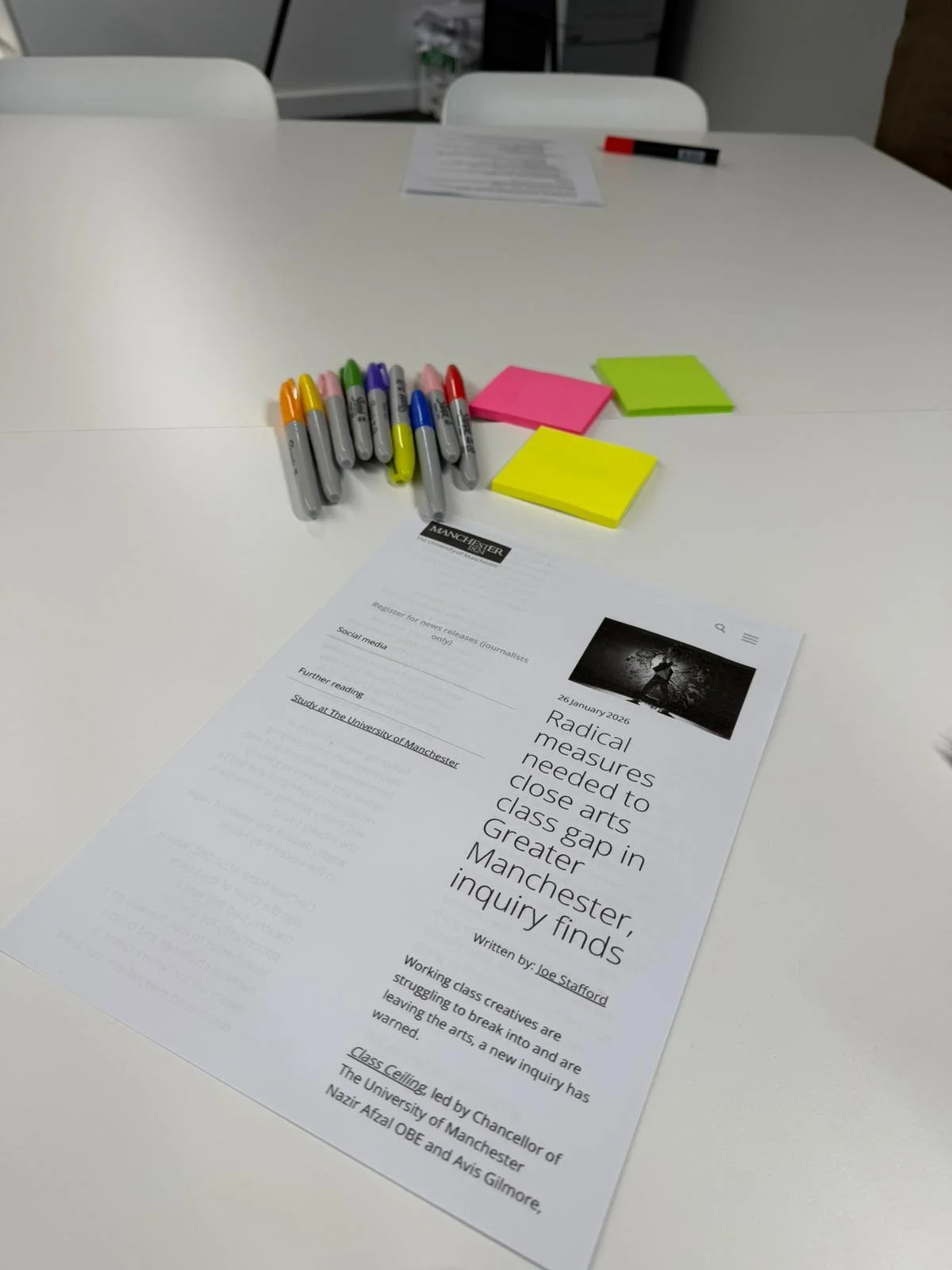
What this tells us (the shared diagnosis)
Across the day, the threads converged around one core issue:
Too many people are being expected to manage alone - and we’re losing talent, wellbeing and possibility because of it.
The Melting Pot didn’t “fix” that in an afternoon. But it did make something visible - and shared - that is often held privately.
What happens next
This was the first in a series of conversations. What we do next isn’t entirely clear. Maybe a better resourced organisation could help us by actioning some of these thoughts into next steps? It will take time to work out what comes next, and it feels important not to rush the learning into outcomes.
For now, I want to name what the gathering confirmed, there is an appetite for spaces that:
centre lived experience over status
treat care as labour
separate healing from growth (while letting them inform each other)
design access into leadership and planning
reduce the expectation that people must survive alone
Thank you to everyone who showed up with honesty, generosity and courage - and to those who are carrying this work forward in ways both visible and unseen. More soon….
Have some thoughts on this and/or would you like to join us?
Send me an email to hello@amydaltonhardy.co.uk and I’ll add you to the growing list.